

I broke
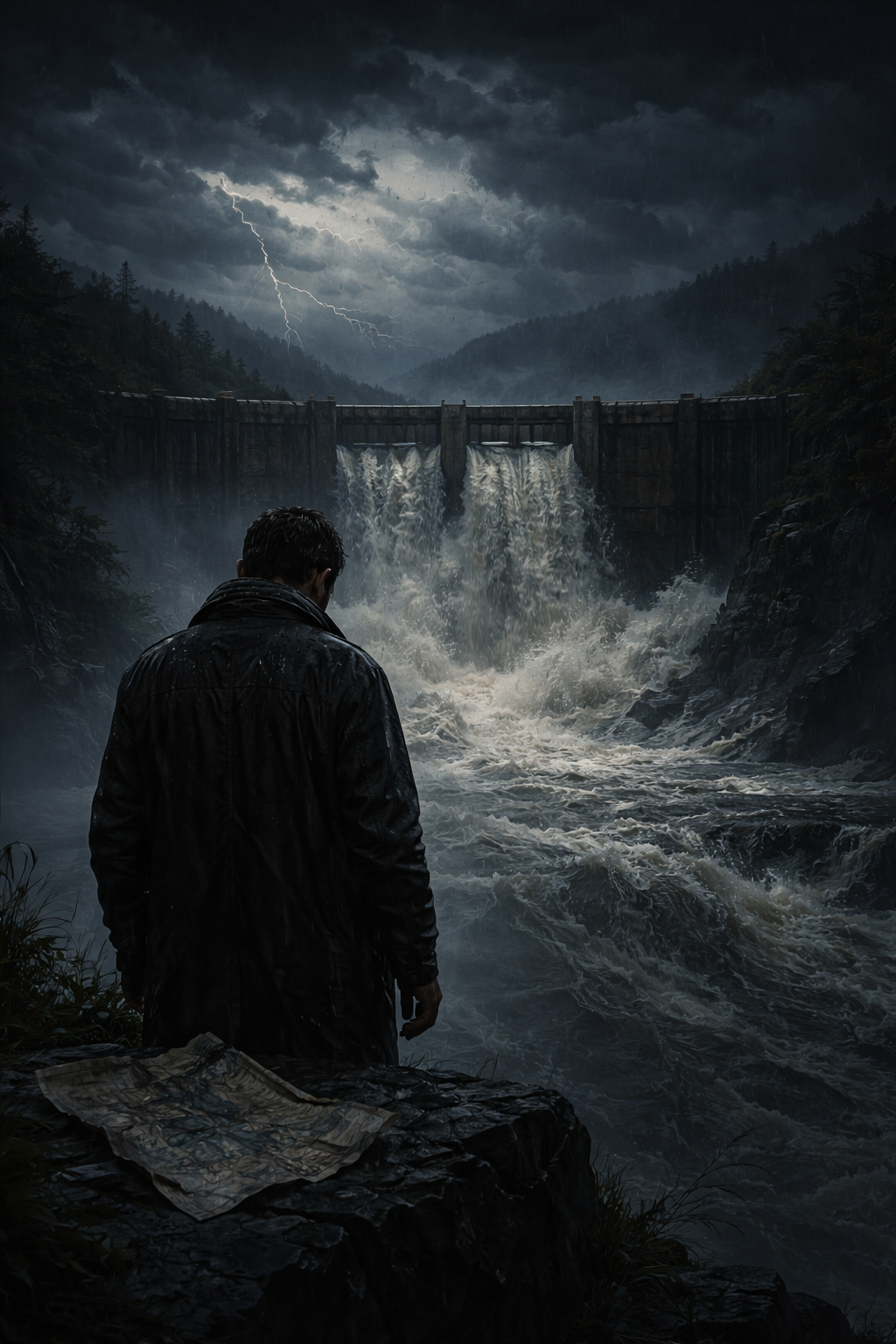
The clouds shivered;
Nature gasped in sympathy;
The ink-stained map vanished
And I was struck dumb.
I, whose words flowed,
Was as a stoppered flood.
All tense and taut in misery
I broke - and they could not come.
Think about the words chosen in this poem and what work they’re doing to create the image:
shivering clouds
An adjective-noun combination which actually gives an unnaturalness to the poem. Clouds do not ‘shiver’. They might ‘drift’ or ‘float’ or ‘race’ - a movement which conveys the idea of motion. ‘Shivering’ conveys the idea of an uncomfortable and unnatural stillness. This signposts what the poem is about - a person who is so psychologically broken that they can no longer express themselves - or behave in a way which is ‘natural’ to them. Clouds which ‘shivered’ would, similarly, be broken.
nature gasping
ink staining
words flowing
a flood stoppered
These are all combinations of nouns and verbs. Verbs are suggestive of ‘action’ but these actions don’t lead anywhere. Just as clouds do not, in reality, ‘shiver’, so nature cannot, collectively, ‘gasp’. Ink might stain but it doesn’t communicate for the map ‘vanishes’, and the flowing words are ‘stoppered’. The image of a ‘stoppered flood’ suddenly turns this unnatural stillness and the sense that things are not right into a tension - and the idea that this state of affairs cannot last. A flood cannot be held back by a tiny cork.
tense and taut - alliteration used to reinforce the meaning and double-down on the sensation of tightness and tension.
Now, look at the punctuation:
The first two lines of the first verse end in semi-colons. This has the impact of layering the three images on top of each other.
In the second verse, we have commas used to insert a subordinate clause which helps to create that tension between the ‘flow’ and the ‘stoppered flood’.
The dash after ‘broke’ then creates a physical representation of the meaning - the ‘breaking’ of the writer.
There is only one clear rhyme - ‘dumb’ and ‘come’. These are situated at the end of each verse. They are a pararhyme, rather than an exact rhyme, and slightly ugly. This matches the meaning of the poem. Situated at the end of each verse, they create a feeling of backwards pressure into the rest of the piece. They also create a feeling of closure: nothing moves, nothing arrives. Sound loops and stops. They seal the poem shut acoustically.
The poem isn’t written with a consistent meter. It’s dominant rhythm is an iambic pulse but it is really written in free verse with truncated and spondaic endings to enact psychological pressure.
All of these features illustrate prosody at work: lexical choices, punctuation, rhyme and meter.