

The Rose
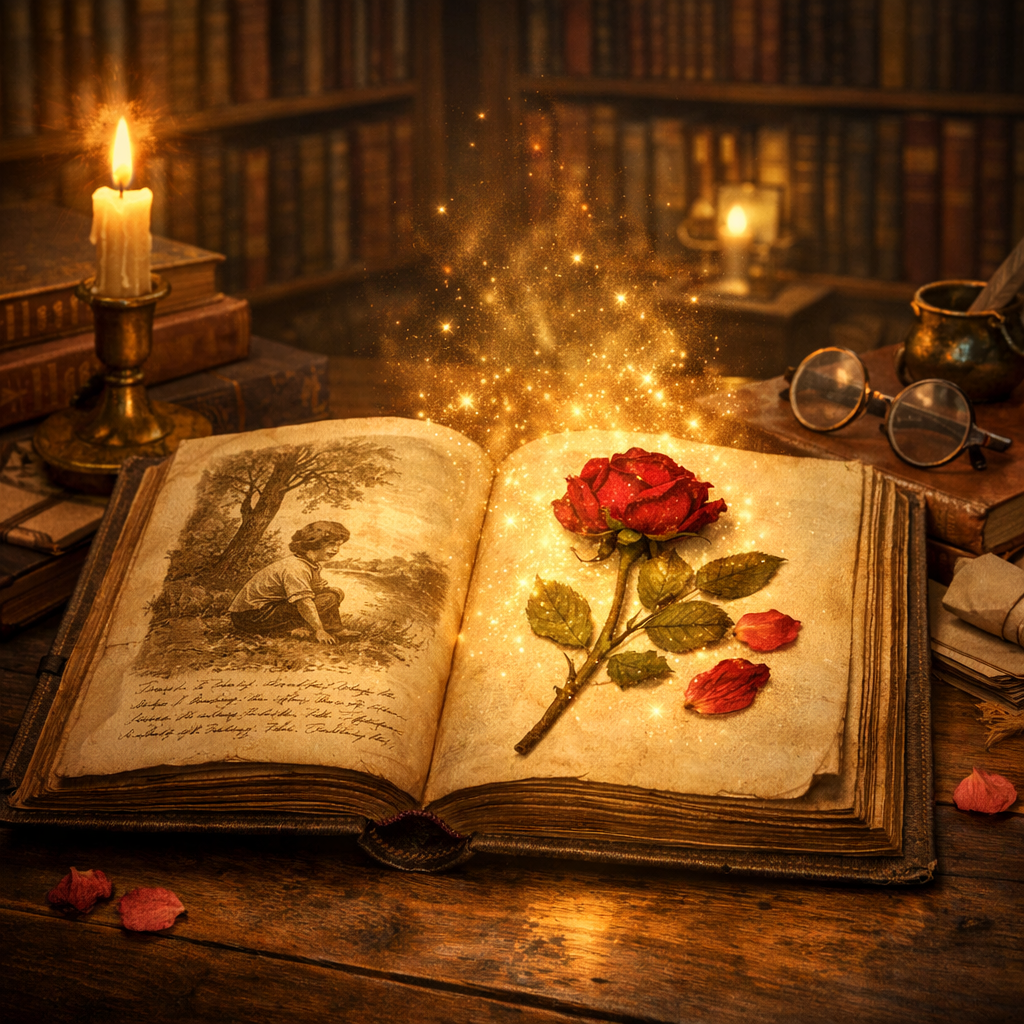
The Rose
Prologue
A rose is a lovely thing; its form and purpose designed to be a union of perfection. A budding rose holds all the potential of the flower in bloom, just waiting to be realised. One day the soft petals begin to emerge, tightly at first, like a young, prim and straight-laced governess, stepping out of the pages of some Victorian novel. Even this can bring a gasp of awe as the curve of her lips smiles like a first inviting kiss. And, yet, the real glory of the rose remains subtly hidden. Slowly and almost undetectably, the petals unfurl, revealing their soft, vibrant velvet, a unique beauty which, like the deep and secret heart of man, can so easily be bruised by the slightest touch - and, then ... when evening falls and after the rose has been embraced by the love of a summer sun, her true treasure, invisible, unforgettable and utterly indescribable, fills the air. She loiters in a corner of the garden like some ephemeral guest. She's been waiting there all day but, only now, will she reveal herself. Moving through the foliage and wafting herself gently over the dewy lawn, she is the ultimate intoxication. Go on; breathe her in ... and sigh. All is peace and contentment.
Chapter One: The Murder
One day, a sweet little girl was entranced by a rose, as all little girls are. Foolishly, all little girls greedily desire to possess the perfume of a rose and they willfully destroy her, crushing and drowning her loveliness into pungent and stagnant decay. The little girl leaned into the tender face of the rose and soaked up her glory: heaven. As she drew back, her attention was drawn to the lilies of the valley which grew beneath the rose. Only days ago, those small, white, bobbing bells had filled the garden with their fresh and uplifting fragrance. But, now, they were drooping and brown, for such loveliness, it seems, is not destined to live for long. Sadly, the little girl looked back at her rose. It, too, must die ... and death is the end of all things.
Tears filled her eyes. Hot tears, heated by the emotional love of a child for the preservation of a beautiful moment. What could she do? Like all young things, the girl could not face the thought of death and, so, in an act of perverse logic, she killed the rose. She plucked her from her stem and cut her off in her prime. What a crime! If the scream of a rose could have been heard by mortal ears, the whole world would have turned its head in terror at such anguish of soul. As it was, there was only silence and tranquility as the ruthless little horror carried her victim into the kitchen.
Carefully, she placed the dead rose onto sheets of absorbent white tissue paper. She spread the petals wide and separated each and every one: methodically detaching them and dissecting them. A budding scientific mind at work, curious but calculating and cold. Finally, she completed the shroud by laying yet more tissue paper on top. Then she buried the corpse. She hid it within the pages of a book, an old book, a heavy leather bound coffin whose contrast to the fragile delicacy of the rose could not have been more stark. The job done, the little girl took the book back into the library and, climbing to the very top of the shelves, thrust it back between its fellows. Standing, sentinel-like, this unwitting guardian soon melted into the uniformity of the whole: faceless, like a row of weatherworn headstones.
Satisfied with herself that she had done a good deed, the little girl immediately forgot the rose and, as she skipped outside, carefree, her giggling laughter could be heard echoing through the garden ...
Chapter Two: The Library
The library is a great place. Its dark oak bookshelves span the entire room, floor to ceiling. They give place to the door, the window and a carved marble fireplace topped by a predictably eighteenth century portrait, but to nothing else. It is a metaphor for human endeavour, a vast and endless circle of wisdom and of knowledge which barely a soul uses. Most visitors to the house, now just a mausoleum of frozen time, do not even acknowledge its existence. They stand behind a green rope line and gaze with blank curiosity at the carved oak cases with their over-heavy volumes filed by order, but the brass grills remain shuttered and locked, their secrets kept secretly within. The thick green damask curtains, themselves, even hide a few books behind their generous swags.
The library has not been used for many years for the books are not modern paperback novels, meant to be read, enjoyed and passed on. No: they are antiquities. Quarter bound in thick leather, they contain hand painted illustrations of tropical birds and detailed outdated maps of the counties of England. The Waverley novels rub shoulders with Dickens and the Complete Works of Shakespeare. Byron's dreary poetry is there and A History of the Tudors along with several faded copies of Wisdens. It all smacks of the 1930s and an ancient family's impoverishment through debts, indulgence, depression and a war which destroyed a generation and deprived them of an heir. Death duties. There is a slight smell of must, the inevitable result of damp air and a thin coating of dust. It's pleasant in its own way, giving one a sense of age and longevity: permanence and elegant neglect. It is this comforting illusion which pleases the snaking line of gawping bourgeois onlookers which passes through each day. It is why they come.
Epilogue
But ... if you were to take the time to search carefully, book by book, page by page, you might find something rather incredible. For if you were to find that one unique volume and gently peel back the yellowing paper to peep inside, you'd find treasure, for pressed between the sheets of some insignificant volume of verse there lies a rose. Her vivid colour still as bright; her velvet sheen as soft. Has she aged at all? True: she no longer lives and breathes but, for a moment, it is as if the oaken monstrosities vanish into nothingness as the intoxicating glory of that long dead rose once again fills the air and her shadowy phantom once more casts her spell as she walks within the garden at dusk. Go on; breathe her in ... and sigh. Though that fiendish laughter may now be silent, death, it seems, is not the end of ALL lovely things ...